
In the Gospels many meals are recounted. We might think of Jesus eating with Mary, Martha, and Lazarus. We might think of Jesus making Himself known “in the breaking of the bread” as He and the two disciples were eating dinner together in Emmaus. Or we might think of those scandalous accounts where “he has gone to eat at the house of a sinner!”
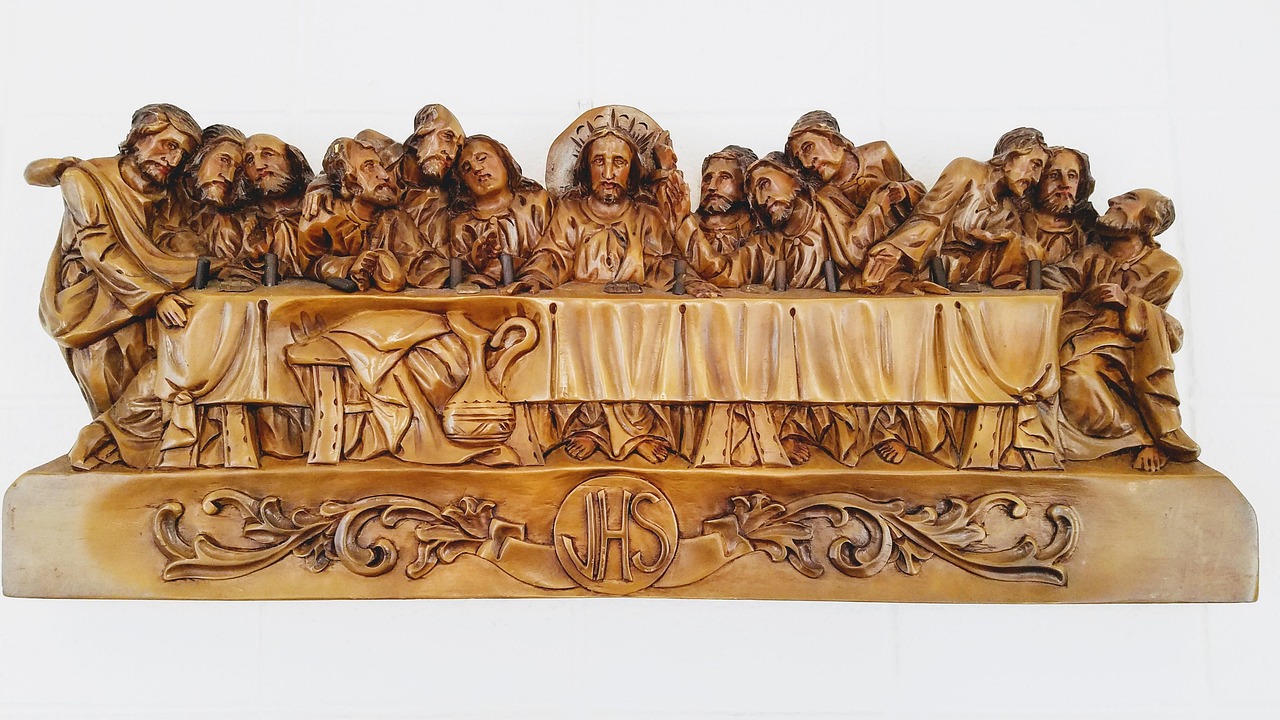
I wish to suggest that the Church ought to be so conformed to Jesus that we end up re-living all the meals of Jesus. But I feel it needs to be understood and emphasized that these kinds of meals were not all the same. Why do I say this? Because there is a tendency to think of the Last Supper as a meal identical to the meals which were the occasions to reach out to the sinners. They are not identical. Even if the same set of people, with their varieties and mixtures of failures great or small, might have been in attendance for either meal, they were not the same meals.
The essential piece of information might be this. The Jewish observances of Passover meals were solemn and liturgical and ritualistic, much more so than the rituals and prayers that might have been attached to other meals. If Matthew the tax collector celebrated Passover at all, before meeting Christ, I’m sure his “sinner” friends and “sinner” relatives all observed the ritual customs with him. If one was such a heretic or apostate that they skipped the Passover observances, then I’m sure this kind of sinner just skipped them. I cannot imagine some grand proposal that one turn the Passover meal into a “down-to-earth” occasion with the same atmosphere as the normal Thursday night social of the publican group.
But all this said, we must do something with the fact that Jesus’s Passover Meal, now called the Eucharist or Holy Mass by all His disciples, has often been treated as if it could have the same theological significance as Passover, with the bare minimum of solemnity or ritual. “If it is going to be significant, it can’t be strange or foreign to those who live without ritual or solemnity,” so this schizophrenic thinking goes. The idea is wrong, but I guess it’s understandable to a point: “Because Jesus wants all women and men to come to the Eucharist, we must set the tone and atmosphere of the Mass to reach the lowest common denominator of religious familiarity.” Well… simply “no.”
The claim sometimes comes with the supposed justification (or perhaps unspoken assumption) that Jesus would have wanted the Last Supper to be repeated with the same atmosphere and same trappings as the meals which he ate with tax collectors and prostitutes. My whole point here is against such a claim. The claim is not justifiable, and when examined closely it is even detestable. Jesus went to eat at different kinds of meals, and the trappings and atmosphere of each was… well, different! I argue that Jesus implied they all should be understood and related, but related distinctly. It is unfaithful to the Gospels, to the Acts of the Apostles, and the New Testament tradition to cram all these meals together and make the Eucharist – our solemn “breaking of the bread” – attuned to the lowest common denominator.
I would suggest that the whole demand of living as Catholics, in any day and age, might be captured in the task of recognizing and repeating the three different kinds of meals in which Jesus participated. In some sense, he is the “author” of all three kinds. But in another sense, the task of evangelization might be described as keeping Jesus’s most solemn meal as solemn, while at the same time discerning how to extend the grace and meaning of that meal to the other kinds of “table fellowship” that exist.
Jesus had prayerful meals in less ritualistic contexts that consisted mainly of disciples and believers. This is the feeding of the 5000, for example, which points to the Eucharist, but was not the Eucharist. It was a chill meal after a hard day’s studying, on grassy ground, perhaps with announcements that “seconds” were available! This kind of meal is also the meal with Mary, Martha, and Lazarus. On this matter, let as also clarify that St. Paul describes this kind of meal in the Church, where the Eucharist and the “Agape Meal” (as it was called) happened at the same time. We should note it is very clear that there are two kinds of foods present, and one has more solemnity attached than the other; there is “this bread” which is a communion in the Body of Christ, and there is “that meal” which is meant to express the communion of the Church. We know the Agape Meal did not last in the worldwide growth of the Church. No Catholic tradition kept the practice of eating fish or fruit or other meal trappings at the same time as the Eucharist. This was because of a great and happy development, that Christian cultures developed great feasts as the real successors for the Agape Meals. It became completely impractical to pass around the lamb or the beef or raisin cakes at the same place and setting where hundreds of Catholics were participating in the Eucharist. Instead, the great feasting of Christian Holy Days kept the reality of the Feeding of the 5000, only at hours of the day and in contexts different than the “communion in the Body of Christ.”
Last of all, Jesus had meals with tax collectors and prostitutes… and, shall we say it, self-righteous pharisees. Even more, through His presence in the person of Saint Peter, we know Jesus wanted to, and did through His mystical presence, sit down to eat in the houses of Pagan Gentiles! Who knows if the whole household of Cornelius was really inclined to live virtuously like Cornelius himself. But I’m sure they all ate together, Jews and Gentiles together.
Here is the thought of the day. Perhaps the task of evangelization is for every Christian to figure out the best way to discern the distinctions and the occasions to bring more and more people from the 3rd kind of meal to the first kind of meal, with the second kind being a very human, and Jesus-approved, intermediary between the two. The disciple of Christ today needs to know how to go a dinner where he or she is outnumbered by skeptics and non-believers; and also how to bring the skeptic and non-believer to a meal where the believers are setting the tone as the clear majority. The disciple of Christ needs to know how to go out to lunch with each type of sinner, or believer. A disciple today should know how to just-chat for 10 minutes while sipping coffee in the break room, having occasions to point to better forms of sustenance. And the disciple of Christ should be accustomed to the solemnity and ritual and deep traditions which surround Christ’s Passover meal, the Eucharist, knowing how the other two kinds of meals might be connected in the intentions of Jesus.
Yes, every human being is invited to all three kinds of meals. Yes, we should acknowledge there will always be distinctions between them, and know how Jesus wants to be at work in each occasion.
 Ubi Petrus VT
Thank you for this post. I had to read it 3 times but has me thinking. It was part of your Sunday homily which the Holy Spirit prompted me. He prompted me to look at the church around me before the Eucharist and happy to be enjoying this meal with them all. I never felt that way. Very powerful moment.
LikeLike